
Why simple signing tools matter for small business
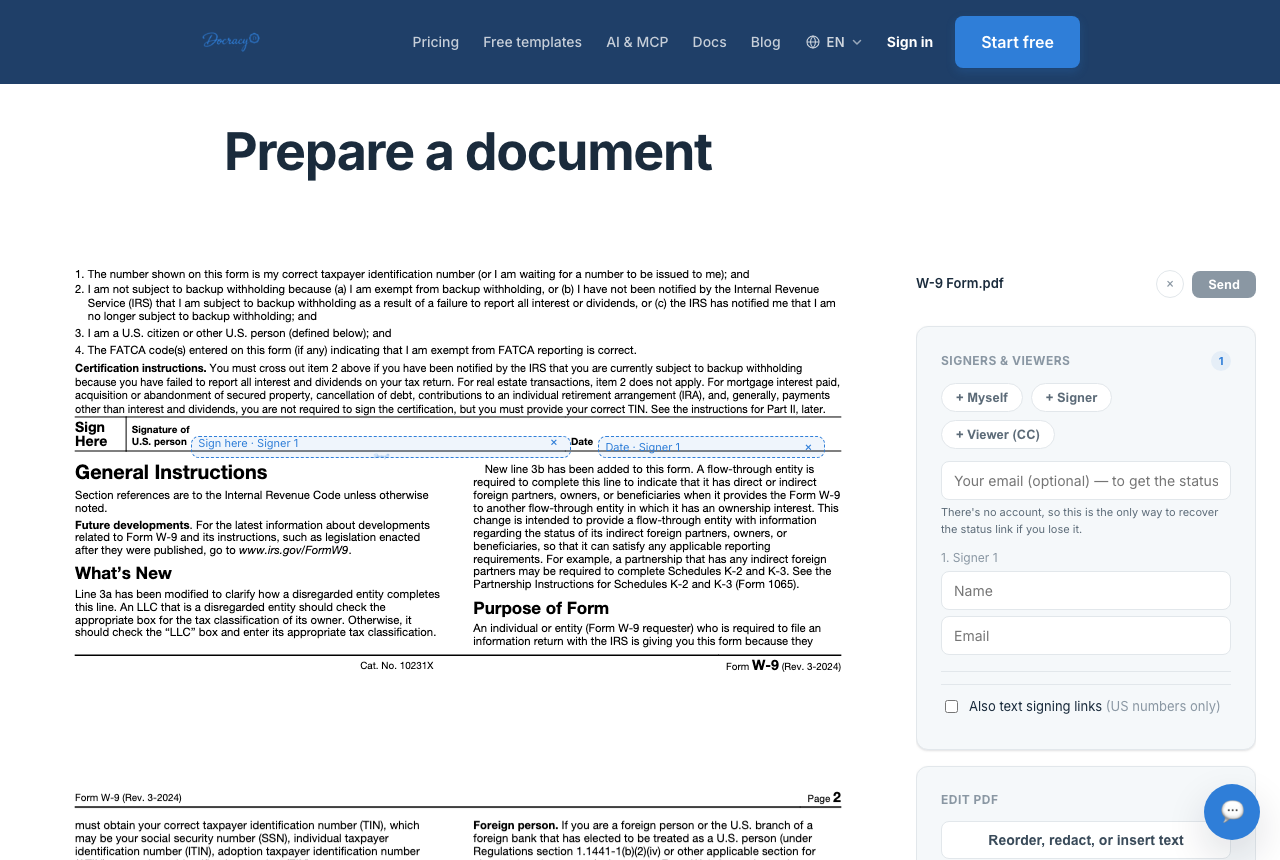

Complex tools slow down workflows. Simple tools increase completion rates and reduce onboarding friction — and for a small business, the gap between those two outcomes is bigger than it sounds. It shows up not as a dramatic failure but as a slow leak: contracts that take three days to close instead of three minutes, work orders that sit unsigned in an inbox, deals that quietly stall because signing felt like one more chore.
Where complexity actually costs you
Every extra step between "send this contract" and "it's signed" is a place a deal can stall. Asking a client or new hire to create an account before they can even see the document is a common one — some percentage of people simply won't finish that step, especially if the document isn't something they were expecting to spend time on.
What a small business actually needs from a signing tool
- A signing link the recipient can open and complete without registering for anything
- A flow that works as well on a phone as a laptop, since many signers open the email away from a desk
- Pricing that doesn't punish a small team the way per-seat pricing does
- Just enough features — templates, reminders — without the enterprise features nobody on a small team will use
Three before-and-after scenarios
A freelance graphic designer used to send contracts as an email attachment. Clients would print it, sign it, scan it back, or — more often — just reply "sounds good" with no signature at all, leaving no real record if a scope disagreement came up later. Now the contract goes out as a signing link; most clients complete it from their phone in under two minutes, and there's a timestamped record either way.
A small property management company used to require tenants to print, sign, and scan or drop off move-in paperwork, which routinely caused delays right around move-in day when nobody has spare time for printer trouble. Now the lease and move-in checklist go out digitally in advance, the tenant signs before arrival, and sequential signing makes sure the property manager countersigns after — no separate follow-up step required.
A solo contractor issuing a change order used to rely on a verbal agreement or a text message saying "ok, go ahead" — a weak record if a dispute over scope or payment came up later. A one-page change order sent for signature now takes less time than the phone call it replaced, and leaves a timestamped, tamper-evident record instead of a text thread that's easy to lose track of.
A concrete example
A landscaping business sending a work order for a new client doesn't need an approval workflow, a CRM integration, or bulk-send tools. It needs the client to open a link, sign, and get to work. Adding steps in between doesn't make the transaction more secure — it just makes it more likely the client puts it off, or texts back asking for a simpler way to confirm.
What friction actually costs a small team
A small business's signers are often people signing something for the first time that month, not a procurement team that signs contracts all day — so every extra click or required account is a real chance for them to set it aside and forget. And on the sending side, time spent chasing down a signature that should have taken two minutes is time not spent on the actual job. It's hard to attach a precise number to this without fabricating a statistic, but the general pattern is consistent: added friction, especially a required account, loses some share of the people who would otherwise have finished.
Pricing is part of the friction story too
The friction isn't only on the signer's side. A per-seat price on the sending side means every teammate who needs to send a document becomes a line-item decision about who "needs a seat." A flat monthly price removes that friction internally — anyone on a two-person team can send documents without a budgeting conversation first. And since most small-business documents genuinely are two-party agreements — a client and a freelancer, a landlord and a tenant, a contractor and a customer — a free tier scoped to two signers matches how the majority of these documents actually get used, rather than forcing a paid plan on day one.
Frequently asked questions
Does a simpler tool mean a less secure one?
Not necessarily. Security comes from how a document's integrity and signing record are handled behind the scenes, not from how many steps the user has to click through. A simple front end can still sit on top of a solid audit trail.
How much does signing friction actually affect completion rates?
It's hard to put a precise number on it without fabricating a statistic, but the general pattern holds across most digital processes: every additional required step (especially account creation) loses some share of people who would otherwise have finished.
Do I need every teammate to have a paid seat to send documents?
No — pricing here is flat per account per month rather than per user, so adding people to your team doesn't multiply the cost the way it does with per-seat platforms.
Send your first document for free
Why teams start with Docracy
“Docracy is a great product that I have tested and am using. It is easy to use, has good tools, is always up to date, and implements new features. Highly recommended.”— DACH Advisory


Also: Compare e-sign pricing · Free mutual NDA template
No account required for up to 2 signers.