
How freelancers protect their work with agreements
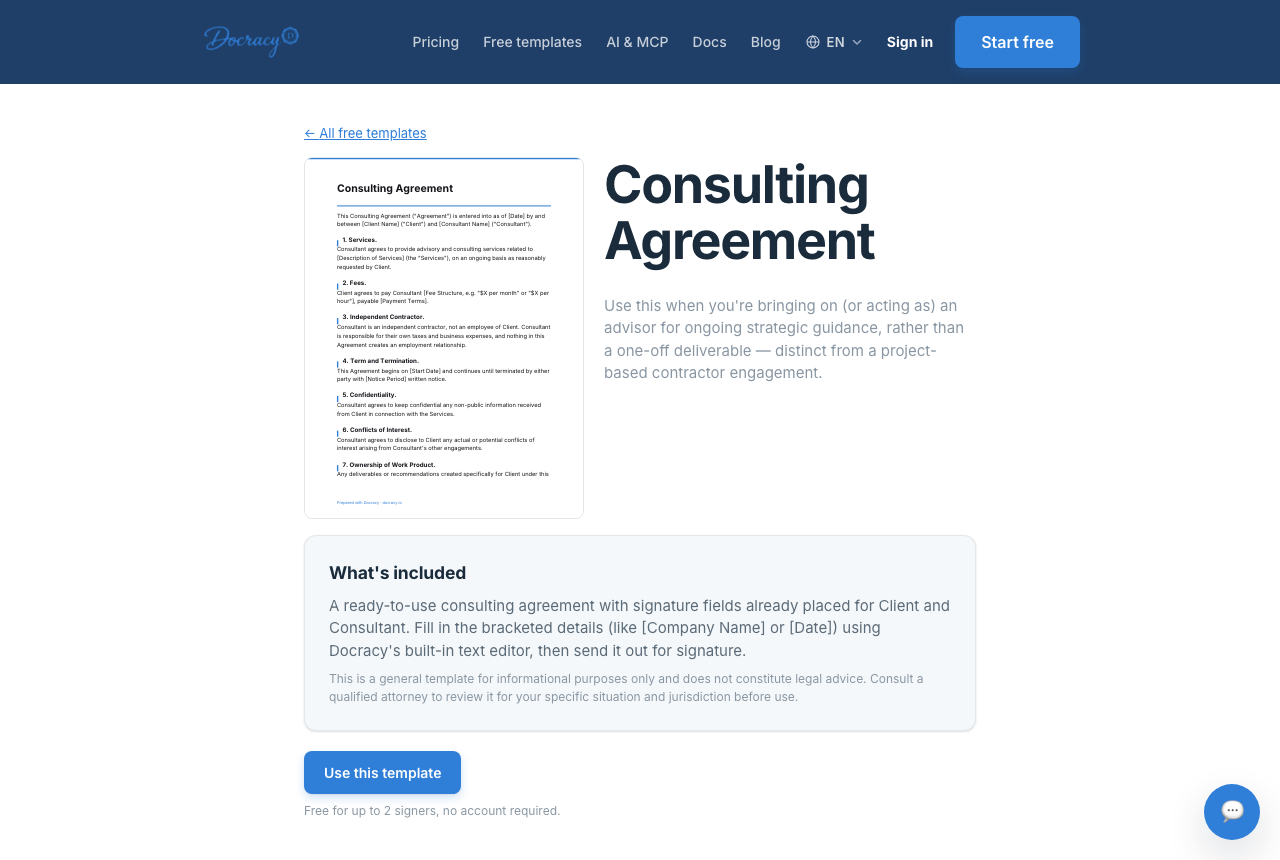

"Protecting your work" as a freelancer usually isn't about stopping outright theft — it's about preventing the slow erosion that happens when scope, ownership, and payment terms are never written down clearly. Three tools handle most of it: NDAs, clear contracts, and defined deliverables. But the part that actually matters most in a dispute is narrower than all three: exactly when ownership of the work changes hands, and what happens if it doesn't go as planned.
NDAs: protecting information, not just work product
An NDA protects the information exchanged during a project — client data, internal plans, your own process if it's proprietary. It's less about the final deliverable and more about everything that gets discussed along the way, including information a client might share during a discovery call before any contract exists at all.
Clear contracts: protecting the relationship
A contract is what protects you if a client disappears mid-project, disputes an invoice, or tries to expand the scope without renegotiating payment. The specific clauses that matter most for a freelancer: payment terms, what happens on late payment, and who owns the work if the project is cancelled halfway through.
Defined deliverables: protecting your time
Vague deliverables ("a website," "some marketing copy") are how scope creep happens — not through bad faith, but because neither side defined "done" the same way. Listing specific deliverables, revision counts, and what's explicitly out of scope turns a fuzzy expectation into something you can point back to.
Work-for-hire vs. a license: two different ownership models
Most client contracts use a work-for-hire structure: once the client pays in full, they own the deliverable outright, and you keep nothing but the right to show it in a portfolio (if the contract says so — otherwise not even that). The alternative is a license: you retain ownership of the underlying work and grant the client rights to use it, which matters if you're building on reusable components — a code library, a design system, a set of illustration assets — across multiple clients. Neither model is automatically better; the mismatch happens when a freelancer assumes a license and the contract actually says work-for-hire, or vice versa. That's a sentence worth reading carefully before signing, not assuming.
Ownership timing: the clause that actually does the protecting
The riskiest gap in a freelance contract isn't whether the client eventually owns the work — it's when. If a contract transfers ownership on delivery rather than on payment, you've handed over the asset before you have any leverage left to collect on it. A contract that instead states ownership transfers only upon receipt of full and final payment keeps that leverage intact: the client can review and use drafts during the engagement, but the finished, licensed asset doesn't become theirs until the invoice clears. In practice this reads as something like: "Full ownership of the deliverables transfers to Client only upon receipt of full and final payment; until then, all work product remains the exclusive property of Freelancer." It's a small sentence that does a lot of the actual protecting.
Kill fees: getting paid for a project that ends early
A kill fee is a pre-agreed payment owed if a client cancels a project after work has started but before it's finished. It exists because a freelancer who accepted a project typically turned down other work to take it — cancellation shouldn't mean walking away with nothing for time already invested and opportunity already forgone. A common structure scales with progress: no fee if cancelled before work begins, a flat percentage of the total project fee (commonly somewhere in the 25–50% range) if cancelled after work is underway, and full payment for any deliverables already completed and delivered. Whatever the specific numbers, the point is to write them down before the project starts — negotiating a kill fee after a client has already decided to cancel is a much harder conversation than agreeing to one in advance.
When a client goes dark mid-project
This is one of the more common ways "protecting your work" actually comes up in practice: a client pays a deposit, work begins, and then communication simply stops — no cancellation, no dispute, just silence. Without a contract, it's unclear whether you're obligated to keep working, whether you can invoice for partial work, or whether you can walk away and keep the deposit. A contract that includes an abandonment clause — for example, treating a client as having terminated the engagement after a defined period of non-response, commonly 15–30 days — resolves this cleanly: you retain the deposit, you're released from any further deliverable obligations, and any partial work product stays yours until outstanding balances are settled.
What this looks like in a real dispute
If a client later claims a deliverable was never finished, or disputes that they owe a cancellation fee, the contract is the only neutral record of what was agreed. This is also where a timestamped audit trail earns its keep — a record showing exactly when the contract was sent, when the client opened it, and when they signed it removes any ambiguity about whether the terms were actually agreed to, not just emailed and ignored.
Frequently asked questions
Who owns the work until the final invoice is paid?
That depends entirely on what the contract says — which is exactly why it needs to be in the contract. A common approach is retaining ownership of the deliverable until final payment clears, then transferring it.
Is a verbal agreement with a long-time client enough?
It can work fine for a while, right up until it doesn't — a change in scope, a dispute, or a client's own internal turnover can suddenly make a written record matter a lot. A short written contract costs little and removes that risk entirely.
Is a kill fee standard, or will it scare off clients?
It's common enough in freelance and consulting work that most experienced clients won't blink at it. Framing it as compensation for time already committed, rather than a penalty, usually keeps the conversation straightforward.
Can I reuse code or design elements from a work-for-hire project on future projects?
Only if the contract says so, or unless the reused element is a general-purpose tool or component you built independently of the specific project rather than something created for that client. When in doubt, keep proprietary building blocks under a license rather than a full work-for-hire assignment.
Free contract templates for freelancers
Why teams start with Docracy
“Docracy is a great product that I have tested and am using. It is easy to use, has good tools, is always up to date, and implements new features. Highly recommended.”— DACH Advisory


Also: Compare e-sign pricing · Free mutual NDA template
No account required for up to 2 signers.